DOLLAR SAVINGS VS. NAIRA SAVINGS
Which is Smarter for Nigerians?
INVESTMENT
Fabian Agore
11/5/20252 min read

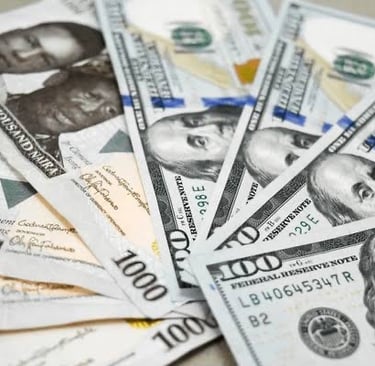
In Nigeria’s unpredictable economy, deciding whether to save in dollars or naira has become an essential financial decision. With the naira losing value and inflation staying high, choosing the right currency can determine how well you preserve your wealth.
The Decline of the Naira
The Nigerian naira (₦) has struggled in recent years due to economic instability, oil dependence, and foreign exchange reforms. By late 2024, inflation soared to about 34%, before easing to around 23% by mid-2025, according to the National Bureau of Statistics.
The sharp rise was driven by several factors: the naira devaluation, fuel subsidy removal, high energy and transport costs, and rising food prices caused by insecurity and supply disruptions. As a result, money saved in naira continues to lose purchasing power, making it harder for savers to maintain the real value of their income.
Why Nigerians Turn to Dollar Savings
In contrast, saving in U.S. dollars provides a buffer against the naira’s volatility. The dollar is stable, globally recognized, and less affected by local policy changes. When the naira weakens, the naira-equivalent of dollar savings rises — helping Nigerians preserve their wealth.
This has fueled growing interest in dollar-denominated savings accounts, domiciliary accounts, and digital dollar wallets offered by fintech platforms like Grey, Chipper, and Bamboo. For many middle-class Nigerians, dollar savings are now a form of protection against economic uncertainty.
The Drawbacks of Dollar Savings
However, dollar savings are not without downsides. Access to dollars is limited due to foreign exchange restrictions, and most people rely on the parallel market, where rates are much higher. Also, dollar accounts typically offer little or no interest, meaning you may preserve value but earn minimal returns.
If your expenses and earnings are mostly in naira, holding too many dollars can also hurt liquidity for day-to-day needs.
When Naira Savings Still Matter
Despite its weaknesses, naira savings remain practical for short-term goals such as rent, school fees, or business operations. Nigerian banks also offer higher interest rates on naira savings and fixed deposits, which can partly cushion inflation losses.
The Smart Middle Ground
Ultimately, the smartest choice is diversification. Keeping some savings in naira ensures liquidity for local spending, while holding part in dollars protects long-term value. This balanced approach provides flexibility and financial stability amid Nigeria’s ongoing economic challenges.
Visit this page daily for your dose of financial sense to power up your wealth growth. Also, share with your family, friends and colleague